Etienne Psaila
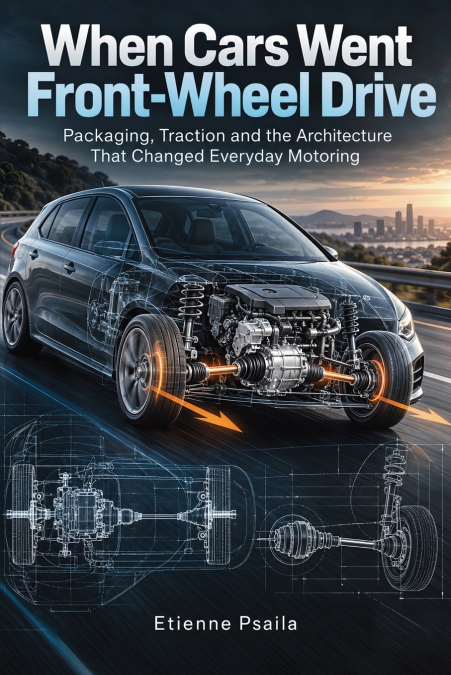
What if one of the biggest revolutions in motoring was simply a change in which wheels drove the car? For much of automotive history, the familiar arrangement placed the engine at the front and delivered power to the rear wheels. Yet engineers had long recognised that driving the front wheels could unlock a different way of building cars, one that promised better use of space, practical traction and new possibilities for passenger accommodation. When Cars Went Front-Wheel Drive explores how that idea developed from difficult early experiments into one of the defining architectures of modern motoring. From pioneering engineering and the Citroën Traction Avant to the original Mini, the Fiat 128, the Volkswagen Golf and the rise of the family hatchback, the book traces the inventions, compromises and industrial decisions that transformed everyday cars. Along the way, discover how constant-velocity joints made driven steering wheels practical, why transverse engines changed vehicle packaging, how differentials distribute power, and what really happens when front tyres must accelerate and steer at the same time. The book also examines understeer, torque steer, maintenance, high-performance front-wheel drive and the renewed debate over which wheels should receive power in the electric era. Combining automotive history with accessible engineering explanations, this is a story of how manufacturers learned to build cars around the needs of their occupants without ignoring the mechanical compromises involved. For motoring enthusiasts, curious drivers and readers interested in how cars work, it reveals why one seemingly simple engineering decision changed the design of millions of vehicles. Disclaimer: This is an independent, unauthorised work of automotive history and engineering commentary. Manufacturer, vehicle and product names are used solely for historical identification; all associated trademarks belong to their respective owners. This book is not affiliated with, sponsored by or endorsed by any vehicle manufacturer. Technical information is provided for educational purposes and should not be treated as professional repair or safety advice.