Inicio > Humanidades > Filosofía > Historia de la filosofía occidental > Filosofía occidental: antigua, hasta c. 500 > When the Gods Decide Divine Will, Fate, and Human Freedom in Ancient Egypt
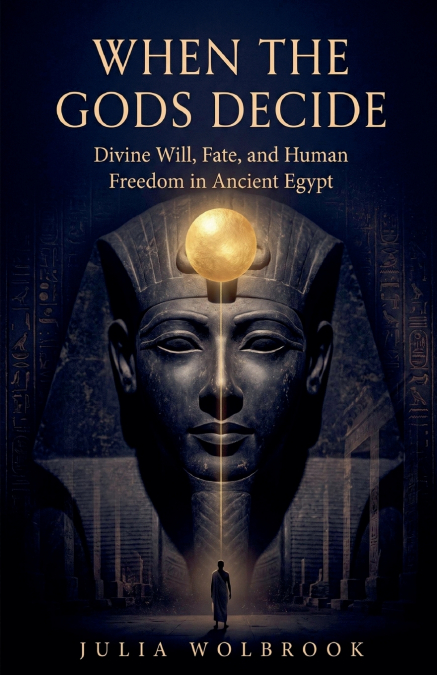
When the Gods Decide Divine Will, Fate, and Human Freedom in Ancient Egypt

When the Gods Decide Divine Will, Fate, and Human Freedom in Ancient Egypt

Julia Wolbrook

14,38 €
IVA incluido
Disponible
Editorial:
Serena Capuozzo
Año de edición:
2026
Materia
Filosofía occidental: antigua, hasta c. 500
ISBN:
9798235017672
14,38 €
IVA incluido
Disponible
Añadir a favoritos

Four thousand years before 'everything happens for a reason' became a comforting cliché, the Egyptians had already built an entire civilization around the question of who, or what, was really in charge of a human life.They believed a person’s fate was written the moment a midwife set them down on a birth brick. That a god’s hand could lift a beggar into a king’s court or cast a high priest into the street like a stray dog. That wealth, sickness, love, and the length of a life itself were gifts, or judgments, dispensed by powers no mortal could see, and few dared question.And yet they never stopped trying to bend that will anyway.They prayed to it. Bargained with it. Confessed to it, flattered it, and , when all else failed , threatened it. They built magic to fight the very fate their gods had decreed, wore amulets against demons that stalked the space between worlds, and inscribed their triumphs and their sins onto stone, hoping a god was somewhere listening.When the Gods Decide excavates this forgotten vocabulary of divine intervention , word by word, tomb by tomb, prayer by prayer , and follows it forward through the Bible, the Quran, and the proverbs still spoken on the streets of Cairo today. The result is not a dusty study of dead religion, but a strikingly intimate portrait of a question every human being has asked since the first grave was dug: how much of this life is truly mine to choose?The pharaohs are gone. The question never left.
Artículos relacionados

  • The Nature of Things
    Lucretius Lucretius
    De rerum natura (On the Nature of Things) is a 1st century BC didactic poem by the Roman poet and philosopher Lucretius with the goal of explaining Epicurean philosophy to a Roman audience. Lucretius presents the principles of atomism; the nature of the mind and soul; explanations of sensation and thought; the development of the world and its phenomena; and explains a variety o...
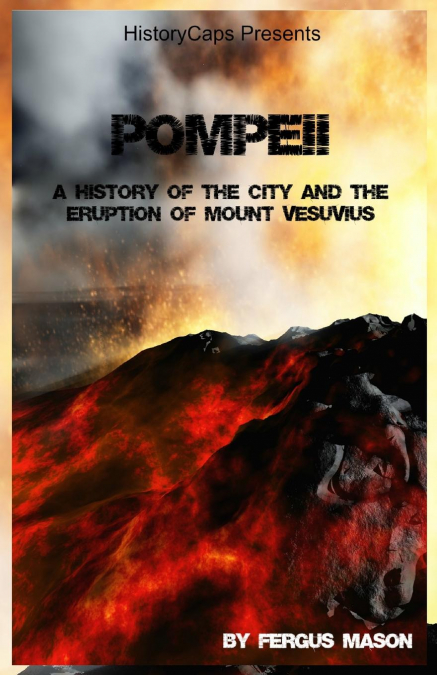
  • Pompeii
    Fergus Mason
    Pompeii was one of most advanced cities of its time; it had a complex water system, gymnasium, and an amphitheater. Despite it's advancements, there was one thing it wasn't ready for: Mount Vesuvius—the volcano that led to its ultimate doom.  The 79 AD eruption of Mount Vesuvius was one of the worst disasters in all of European history. In a near instant, over 15,000 p...
    Disponible

    10,36 €

  • Middle Platonism and Neoplatonism, Volume 1
    Stephen Gersh
    'It is generally agreed that those types of philosophy that are loosely called ’Platonic’ and ’Neoplatonic’ played a crucial role in the history of European culture during the centuries between antiquity and the Renaissance. However, until now no scholar has attempted to describe the evolution of these forms of thought in a single comprehensive academic study.' So writes Stephe...
  • Middle Platonism and Neoplatonism, Volume 2
    Stephen Gersh
    It is generally agreed that those types of philosophy that are loosely called 'Platonic' and 'Neoplatonic' played a crucial role in the history of European culture during the centuries between antiquity and the Middle Ages. However, until now no scholar has attempted to describe the evolution of these forms of thought in a single comprehensive academic study. Middle Platonism a...
  • Porphyry’s Commentary on Ptolemy’s Harmonics
    Andrew Barker
    ...
    Disponible

    80,87 €

  • The Roots of Platonism
    John Dillon
    ...
    Disponible

    26,54 €

Otros libros del autor

  • The Unlearned Bomb Nuclear Coercion, Failed Lessons, and the Persistence of American Nuclear Threats since 1945
    Julia Wolbrook
    Since Nagasaki, no American president has dropped an atomic bomb. Yet none has stopped threatening to.Why would the world’s strongest military keep reaching for the one weapon everyone agreed was too terrible to use? And why did some presidents brandish it while others locked it away?In this gripping new history, the answer lies not in treaties, taboos, or the balance of power,...
    Disponible

    13,36 €

  • Beyond the Longship
    Julia Wolbrook
    What happened to a Viking woman when she died?We know the legends of Valhalla, the warrior’s hall of feasting and endless battle. But the sagas and the graves hint at a stranger, richer world for the women of the North: a road that winds down through darkness to Hel’s gate, a goddess who gathers the dead in her own hall, a mountain where ancestors feast, and a mound where a wom...
    Disponible

    15,45 €

  • The Credibility Gap
    Julia Wolbrook
    He was Washington’s most powerful man, and he knew exactly how to use a newspaper.Lyndon Johnson courted reporters the way he courted senators: with charm, access and relentless attention. In 1964, the press rewarded him with one of the greatest landslides in American history. It cheered his civil rights fight, mocked his opponent as reckless, and turned a Texas politician into...
    Disponible

    12,00 €

  • The Report That Lied Stasi Intelligence, Ulbricht’s Paranoia, and the June 17 Uprising
    Julia Wolbrook
    A million people took to the streets. The secret police never saw it coming. And the man who ruled East Germany had made sure of it.In June 1953, workers in more than seven hundred East German towns rose against a regime that had built one of history’s most feared secret police to prevent exactly this. The Stasi had informants in the factories, agents in the unions, and morale ...
    Disponible

    14,41 €

  • The Day the Torture Stopped Ho Chi Minh’s Death and the American POWs of North Vietnam
    Julia Wolbrook
    For five years, American airmen vanished into the prisons of North Vietnam. They were starved, left to heal on their own, locked in the dark, and broken on ropes in cells the world would come to call the Hanoi Hilton. The Geneva Conventions promised them protection. In Hanoi, those promises existed only on paper.Then, in September 1969, Ho Chi Minh died.Within months, something...
    Disponible

    13,41 €

  • The Spy Who Divided Two Worlds Jonathan Pollard, American Jewry, and the Fracture of the U.S.-Israel Alliance
    Julia Wolbrook
    On a November morning in 1985, a man stood outside the Israeli Embassy in Washington, begging to be let in. The gate stayed shut. Within hours, Jonathan Pollard was in FBI custody, and one of the most explosive spy scandals of the Cold War had begun.He was an American naval intelligence analyst. He was a proud Jew and a devoted Zionist. And for eighteen months, he had been pass...
    Disponible

    14,42 €