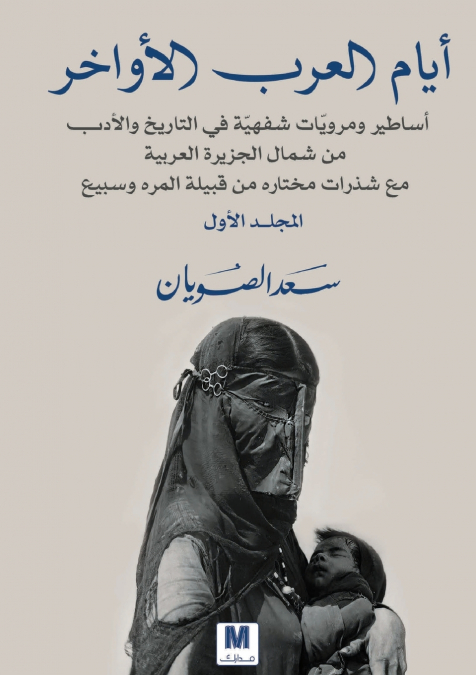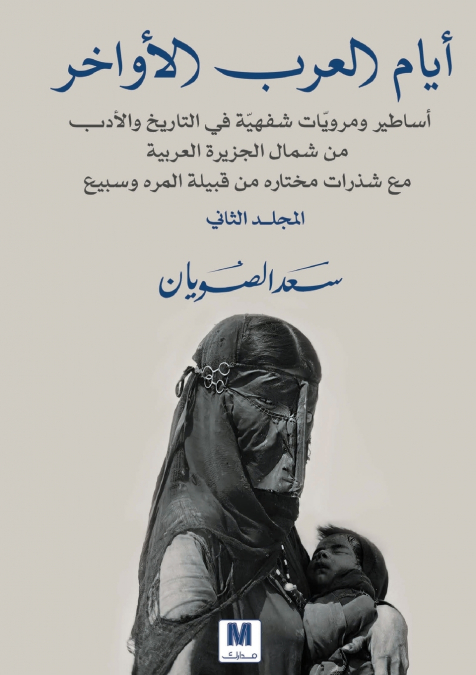
Saad Abdullah Al-Sowayan / سعد العبدالل الصويان
يواصل أيام العرب الأواخر - المجلد الثاني للدكتور سعد العبدالله الصويان مشروعه في جمع وحفظ المرويات الشفهية والسوالف والقصائد والتراث القبلي في الجزيرة العربية، ولا سيما شمال الجزيرة، مقدمًا مادة ثرية عن الثقافة البدوية والمجتمع القبلي والتاريخ الشفهي.يحفظ الكتاب نصوصًا رويت بلهجاتها الأصلية، وتتناول موضوعات متعددة مثل الأنساب، والشيوخ والقيادات القبلية، والغزوات، والحروب، والجوار، والكرم، والقضاء العرفي، والهجرة، والشعر النبطي، والعلاقات بين القبائل، وأنماط الحياة في الصحراء.ولا يتعامل المؤلف مع هذه الروايات باعتبارها وثائق تاريخية محققة، بل بوصفها مادة ثقافية وإنسانية تساعد في دراسة الأنثروبولوجيا والتاريخ الشفهي والفولكلور واللغة والأدب الشعبي. وتكشف هذه المرويات عن قيم المجتمع البدوي وأساليب السرد وحفظ الذاكرة وتناقل الشعر والحكايات بين الأجيال.يمثل هذا المجلد مرجعًا مهمًا للباحثين والقراء المهتمين بتاريخ الجزيرة العربية، والقبائل العربية، والتراث الشعبي، والثقافة البدوية، والشعر النبطي، والأدب الشفهي، والدراسات الأنثروبولوجية والاجتماعية.The Latter Days of the Arabs - Volume Two by Saad Abdullah Al-Sowayan continues an extensive documentary collection of oral narratives, tribal traditions, poetry, folklore, and cultural memory from the Arabian Peninsula, particularly northern Arabia.Drawn from oral recordings gathered over decades, the volume preserves stories and poems in their original spoken dialects. These narratives illuminate Bedouin life, tribal relationships, genealogy, leadership, warfare, hospitality, customary law, migration, poetry, and the social values that shaped desert communities.Rather than treating the accounts as verified historical documents, Al-Sowayan presents them as sources for the study of oral history, anthropology, folklore, linguistics, and popular literature. The narratives reveal how communities remembered the past, transmitted cultural knowledge, interpreted tribal organization, and preserved poetry and storytelling across generations.This second volume is especially valuable for scholars and readers interested in Arabian tribes, Saudi heritage, Nabati poetry, oral literature, folklore, social anthropology, tribal customs, and the cultural history of the Arabian Peninsula.The book itself warns that its stories and myths are oral narratives rather than critically verified historical documents.