Devlin Nexley
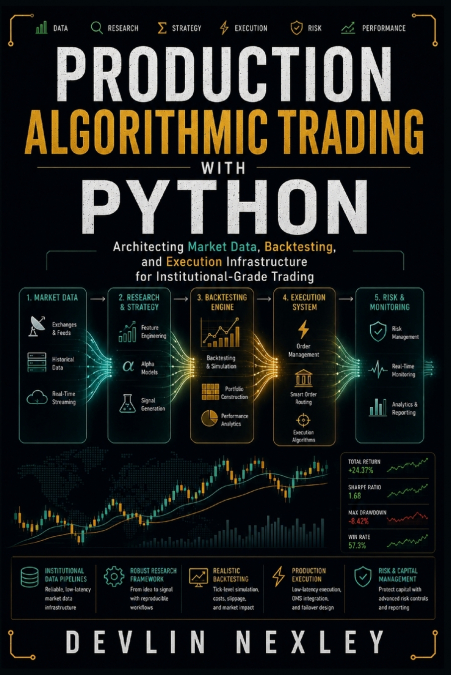
Algorithmic trading is no longer just a collection of trading strategies and scripts. Modern trading platforms are complex distributed systems that combine real-time data engineering, quantitative modeling, event-driven architectures, execution infrastructure, and risk management into a unified financial technology platform.Python for Algorithmic Trading Systems presents a systems-engineering approach to designing and building institutional-grade algorithmic trading platforms using Python.This book goes beyond basic trading automation and focuses on the architecture, internal mechanics, and production challenges behind modern quantitative trading systems. It explores how professional trading platforms process market data, generate signals, simulate strategies, manage risk, and execute orders reliably at scale.You will learn how to design:Real-time market data pipelines for high-volume financial streamsEvent-driven trading architectures built for scalability and reliabilityDeterministic backtesting engines with realistic execution modelingQuantitative research workflows using Python-based analytical systemsStrategy orchestration platforms for multi-model trading environmentsProduction execution systems with order lifecycle managementRisk infrastructure for controlling exposure and operational failuresDistributed trading platforms deployed across hybrid environmentsThe book examines the engineering principles behind institutional trading systems, including:Market microstructure and order book dynamicsTime-series data architectureLow-latency system designConcurrency and parallel processingFault tolerance and recovery mechanismsEvent sourcing and deterministic replayTransaction cost and slippage modelingPortfolio construction and quantitative risk analysisMachine learning workflows for financial systemsCloud-native deployment and operational observabilityWritten for experienced software engineers, quantitative developers, data engineers, and infrastructure architects, this book treats algorithmic trading as a distributed systems problem where correctness, reliability, and reproducibility are as important as strategy performance.Rather than focusing on speculative trading techniques or simplistic indicators, it provides a deep technical foundation for building robust, scalable, and production-ready quantitative trading platforms.By the end of this book, readers will understand how to architect algorithmic trading systems that can evolve from research environments into reliable production infrastructure used in modern financial markets.